
Every month-end, a security integration company with 12 employees repeats the same process. Someone consolidates invoices from one Excel file, technician hours from another, and project costs from a third system. 3 to 4 hours of manual work to produce a report that, by the time it reaches the director, is already days late and usually contains transcription errors that someone will correct the following week.
That process has a structural problem.
In HVAC companies, Pro AV integrators, and specialized subcontractors, the dynamic is similar: the numbers exist, but they live in different places, are consolidated manually, and arrive late. Financial decisions are made with partial or outdated information, not because the company doesn't want clarity, but because the process to obtain it consumes too much time.
AI can change that dynamic. Under specific conditions.
What Does Using AI to Generate Financial Reports Mean?
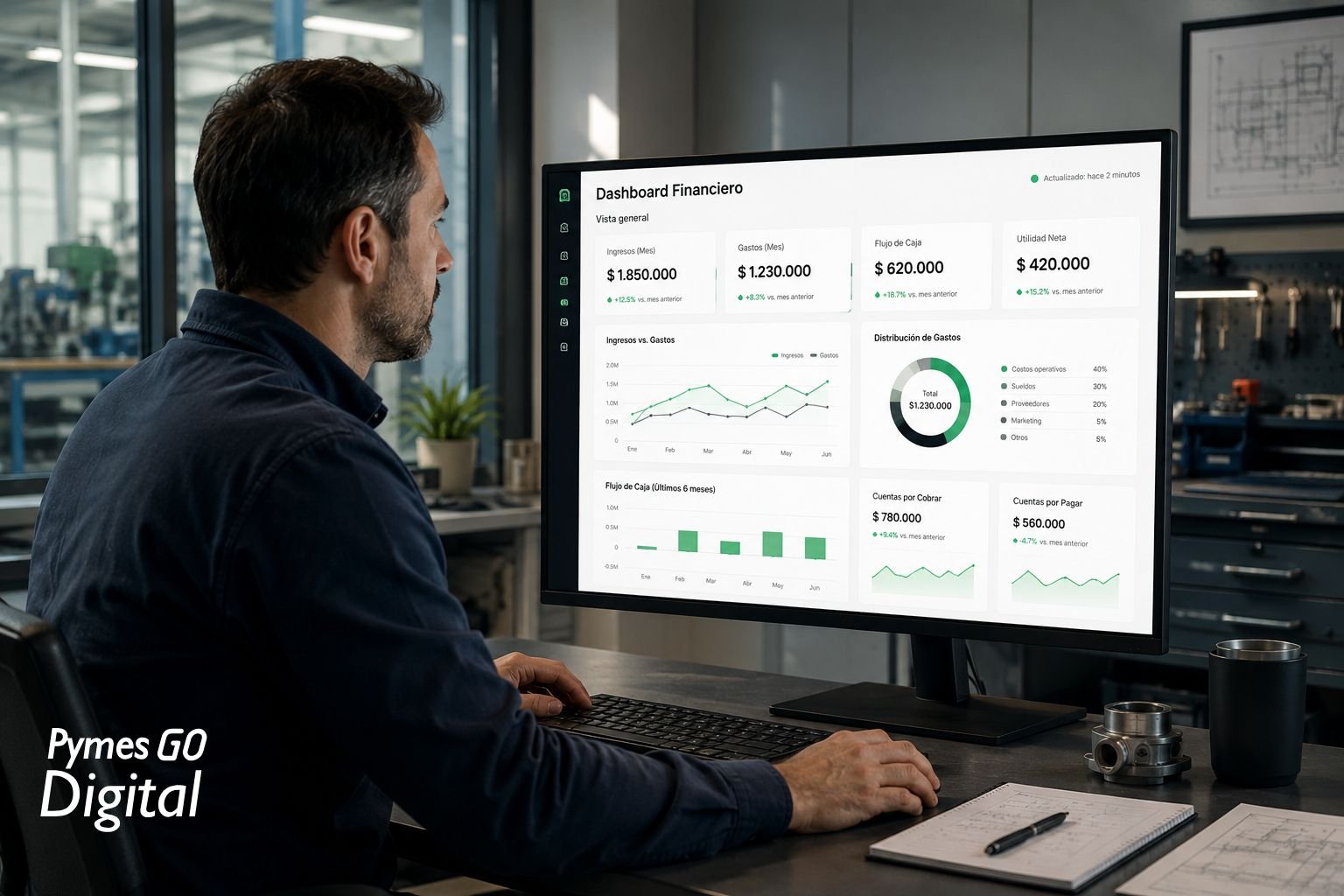
Using AI for financial reports does not mean replacing the accountant or adopting a corporate ERP system. It means connecting the data sources that already exist in the company (sales, expenses, service hours, project costs), automating their consolidation, and generating periodic summaries without manual intervention.
In practice, this can be as concrete as a system that takes data from billing software and weekly operating expenses and generates a margin report by project in minutes. Without anyone having to open them, copy them, and format them one by one.
What it cannot do: interpret the strategic context behind the numbers, meet accounting or tax requirements, or replace the judgment of whoever manages finances. That part remains human.
Why Manual Report Generation Is a Bottleneck
Data arrives, but it arrives late
In most technical SMEs, financial reports are generated at month-end. By the time they are ready, the information is 15 to 30 days delayed. Making decisions based on that report (adjusting prices, reviewing margins, identifying out-of-control expenses) means acting on what already happened, not on what is happening.
The process depends on one person
As with other operational processes in small companies, financial consolidation usually falls on 1 or 2 people. If that person is not available, the report doesn't get done. If they make an error copying data, the report is incorrect. The fragility of the process is proportional to its dependence on specific individuals.
Data exists, but doesn't communicate
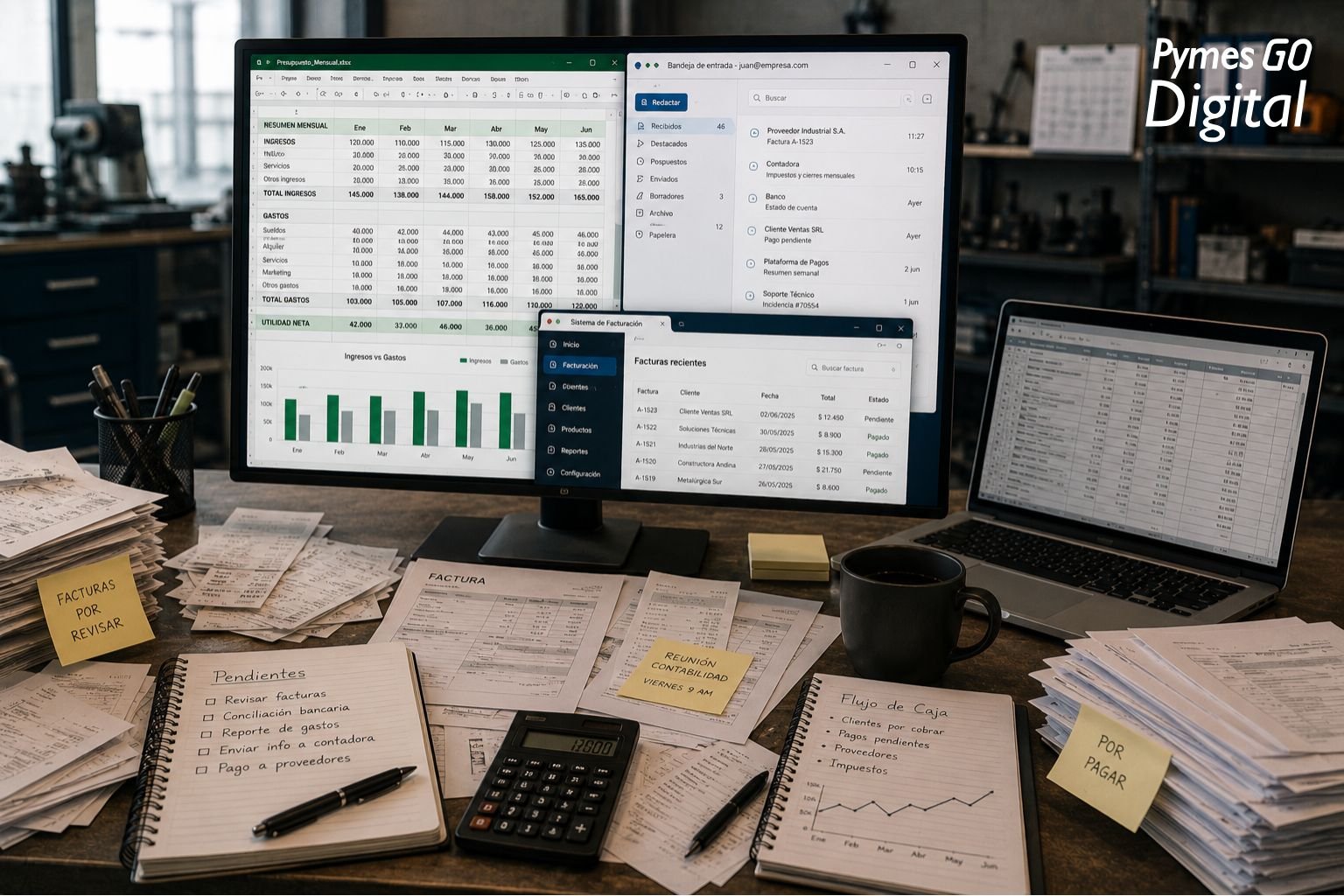
A typical technical company has its sales in one system, its expenses in another, its field hours in spreadsheets, and its project costs in emails or the ticketing system. None of these sources communicate with each other automatically. Someone has to make that translation manually, every time.
Financial information is not used strategically
According to data from BILL, a financial automation platform for businesses, 44% of SMEs adopted digital accounting in 2025, but a significant proportion continues using these tools primarily for record-keeping, not for analysis. Numbers are captured; they rarely become actionable information.
What AI Can Do in Practice
Consolidate data from multiple sources automatically
Platforms like QuickBooks, Xero, and Sage already incorporate AI and automation functions that connect various data sources (banks, billing, expenses) and consolidate them in real time. Xero, for example, uses machine learning to automatically categorize bank transactions and update the company's financial status without manual intervention.
The result is availability: information is ready when needed, instead of arriving accumulated at month-end.
Generate periodic reports without operational work
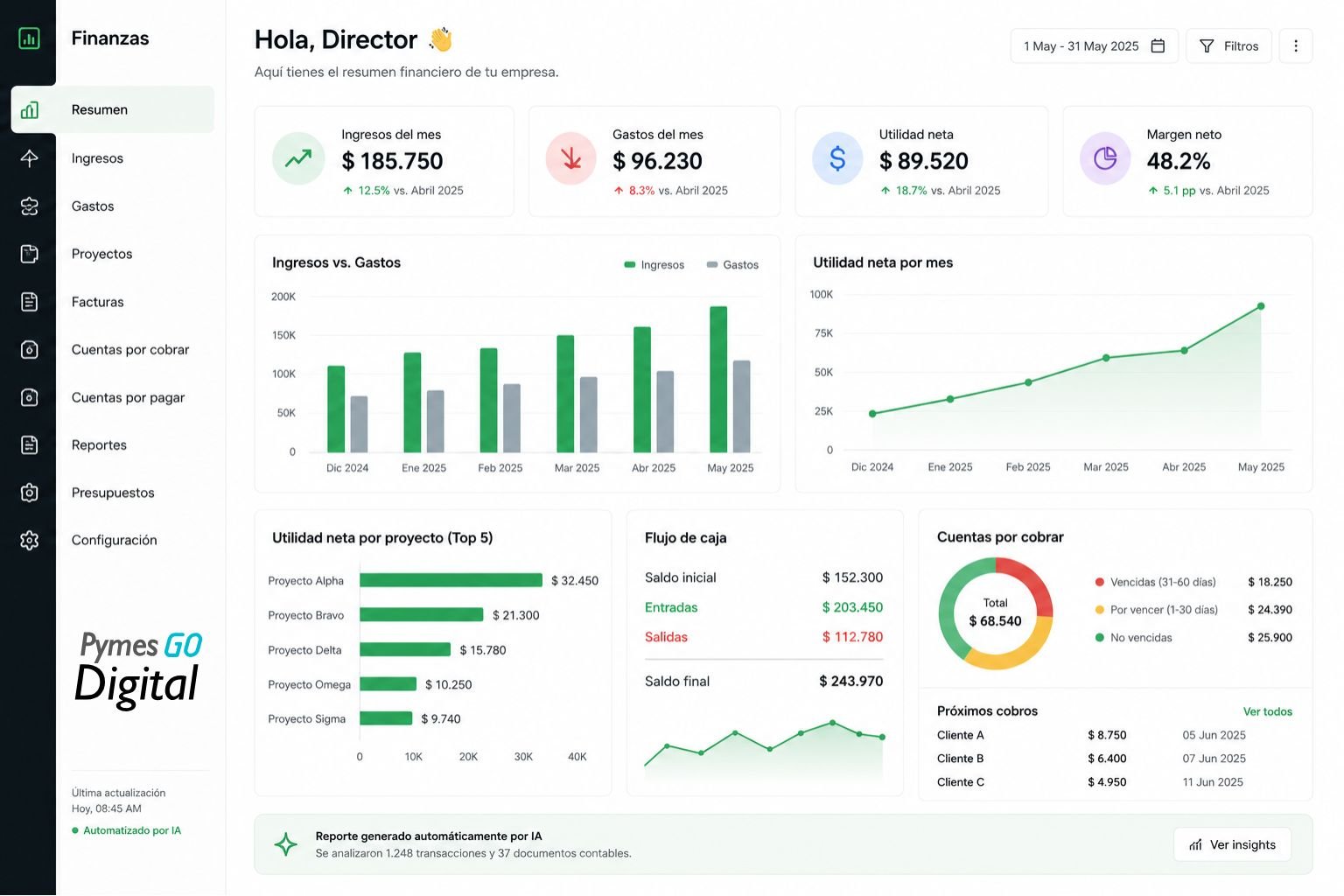
Once data sources and report parameters are configured (what to include, how frequently, in what format), the system generates the document automatically. A weekly income and expense report, a margin statement by project, accounts receivable tracking: all can be produced without anyone building them manually each time.
Companies that have implemented this type of automation report that month-end closings go from 12 days to 3, according to data published by tool providers like Vic.ai and BILL.
Detect inconsistencies and anomalies
AI systems can identify transactions outside the usual pattern: an unusually high expense in a category, a duplicate invoice, a project whose actual cost deviated significantly from budget. This automatic detection does not eliminate the need for human review, but it does reduce the time it takes to identify the problem.
Project basic cash flow scenarios
With organized historical data, some systems can generate basic cash flow projections for the next 30 or 60 days. These are estimates based on previous income and expense patterns. They help anticipate liquidity needs before they become urgent.
What Your Company Needs Before Implementation
This is the point most often omitted, and the one that most determines whether implementation generates value or not.
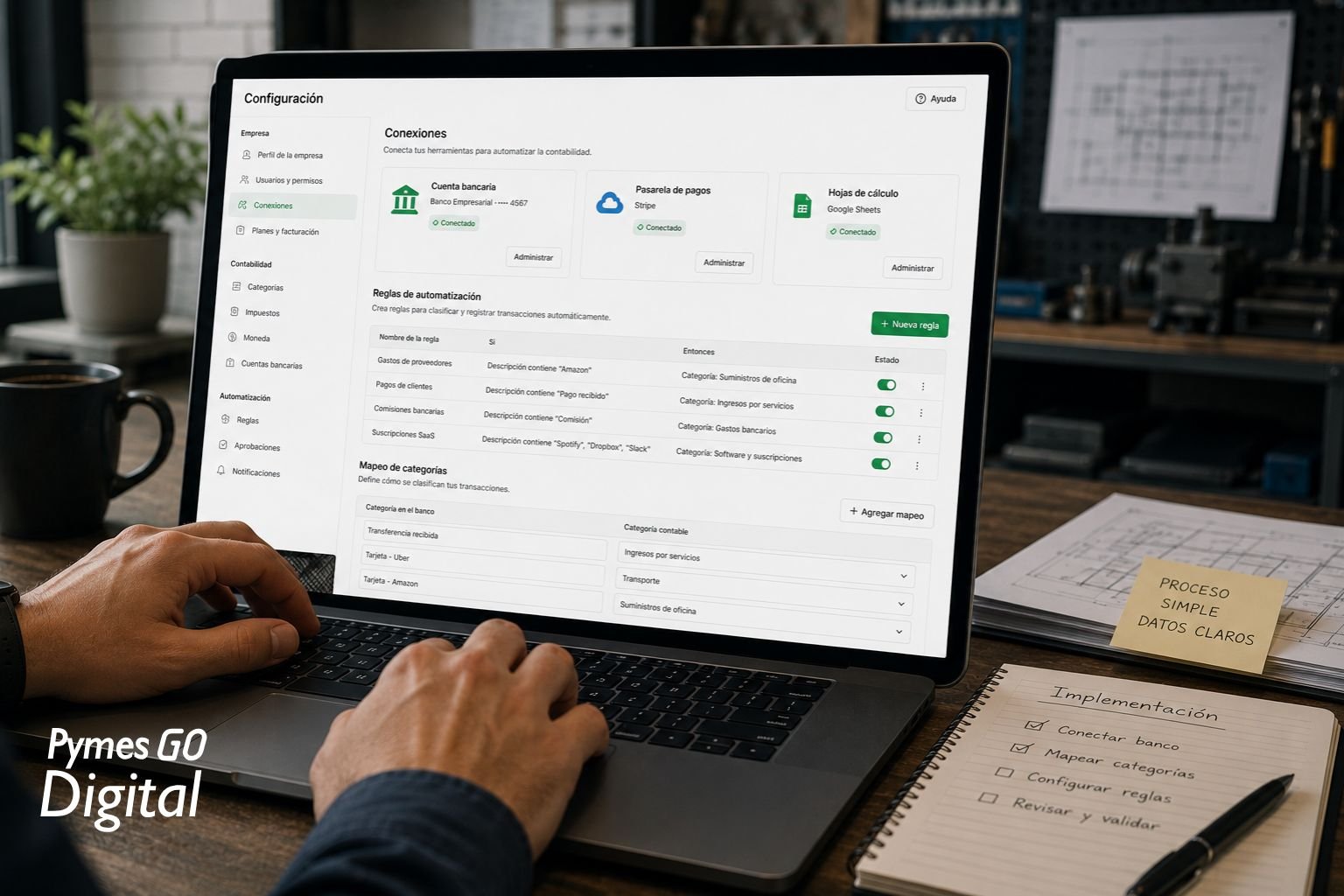
Organized and accessible data. AI consolidates and analyzes. It does not clean or structure. If sales data is in 4 Excel files with different formats and expenses arrive as receipt photos, the first job is to organize them. A well-used basic accounting system (like QuickBooks, Xero, or Zoho Books) is the minimum necessary foundation.
Consistent records. If the information capture process is irregular (sometimes recorded, sometimes not), the automated report will reflect that inconsistency. Automation amplifies what already exists.
Clarity about what report you need. Not "improve finances," but which specific report, with what data, how frequently, and for whom. A security integrator may need a weekly margin report by project. An HVAC company may prioritize tracking active maintenance contracts and their collections. The starting point matters.
What Your Company Needs Before Configuring Any Tool
Documented and approved frequently asked questions. It is not enough to know that customers ask the same questions; those questions need to be written with their exact answers, reviewed and approved by whoever has the authority to approve them. Without that, there is no knowledge base to train.
A protocol for transfer to a human. Define what type of inquiry should exit the chatbot and reach a person, within what timeframe, and through what channel. Without this, the chatbot becomes a dead end for the customer.
One channel to start. The company that implements a chatbot on WhatsApp, email, and social media simultaneously almost always ends up not configuring it properly on any of them. Start where the highest volume of inquiries arrives. The rest comes later.
Common Mistakes When Attempting to Automate Financial Reports
Automating before organizing. Connecting an AI system to disorganized data produces incorrect reports faster. Speed doesn't help when the direction is wrong.
Trusting the report without validating it. The first cycles of an automated system require active review. AI categorizes according to patterns it learns over time; initial errors are normal and are corrected with supervision.
Implementing too much at once. The company that tries to simultaneously automate payroll, project reports, cash flow, and accounts receivable almost never ends well. One well-configured process generates more value than four half-done processes.
Assuming the report replaces analysis. An automated financial report delivers information. What to do with that information (adjust prices, renegotiate contracts, review cost structure) still requires judgment. The report reduces preparation time, not thinking time.
How to Start: 5 Steps
Step 1. Identify the report that consumes the most time in your company today. Not the most strategically important: the one that absorbs the most operational hours each month. That is the starting point.
Step 2. Map where the data for that report comes from. How many different sources there are, who updates them, and how frequently. If the data is not in a system, the first step is to get it there.
Step 3. Choose a tool appropriate for the size of your operation. QuickBooks and Xero are solid entry points for medium-sized technical companies. Both have automated reporting functions, integration with bank accounts, and automatic transaction categorization. They do not require complex technical implementation.
Step 4. Configure and run the first automated report in parallel with the manual process for 4 weeks. Compare results. Identify what data is missing, what categories are incorrectly assigned, what part of the process still requires manual adjustment.
Step 5. Once the first report works consistently, apply the same process to the next one. Not before.
What Is Gained in the End
A technical company that automates the generation of its reports gains real-time financial visibility, in addition to the operational hours it no longer has to dedicate each month.
Knowing each week which projects are profitable, which contracts have pending collections, and how actual spending compares to budget is information that changes how decisions are made and arrives when you can still act on it.
According to IDC, companies that implement AI in financial functions obtain an average return of $3.70 for every dollar invested, with payback periods that, in many cases, do not exceed 9 months. These numbers vary depending on context and implementation, but the direction of return is consistent.
It gives time back to the team so they can manage them better.
Want to See More AI Applications in Finance and Control?
This article is part of the Hub AI for Finance and Control in SMEs, where you will find use cases, practical applications, and resources to improve your company's financial visibility with artificial intelligence.